There are so many changes that come with getting older. Some are exciting, like retiring from work. Others are slightly less exciting, like new hearing difficulties. Aging is one of the most common culprits of permanent hearing loss, and, unfortunately, it’s a cause you can’t stop from happening.
While you can’t stop aging, there are plenty of ways to accommodate your changing hearing needs for easier communication and greater situational awareness. Let’s take a look at how aging affects hearing loss and what you can do to manage it as you move through your life.
How Aging Affects Hearing
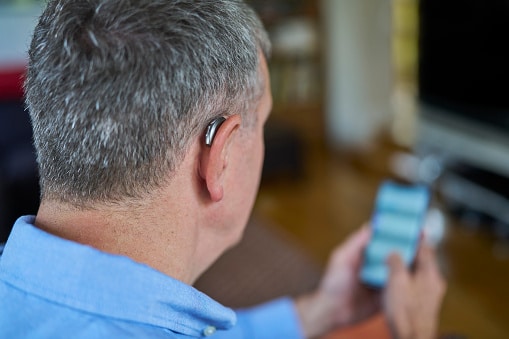
Age-related hearing loss impacts about one in three people in the U.S. between the ages of 65 and 74. By age 75, that number grows to nearly one in two people.[1] There are a few things that can affect your hearing as you age:
- Hair cells in the inner ear, responsible for transmitting sound, die off
- Changes in the middle ear and complex changes along the auditory nerve pathways
- Long-term exposure to loud noise
- Medical conditions that affect hearing (e.g., high blood pressure, arthritis)
You can’t prevent age-related hearing loss, but you can minimize your risk by protecting yourself against loud noise exposure and treating or managing medical conditions early.
Managing Age-Related Hearing Loss
After you develop age-related hearing loss, we’ll likely recommend treatment with hearing aids. These small but mighty devices collect the sound in your environment, amplify it and send it directly to your ears to help you stay connected to the world.
If you’ve lived with untreated hearing loss for a prolonged period, we may also recommend auditory training—the practice of retraining your brain to process speech. The training is sometimes necessary because your brain can forget how to process speech when it goes too long without that auditory input. Think of it like getting back into a fitness routine; if you skip too many runs around Tattnall Square Park, those runs will feel even harder when you get back into them. Auditory training gets your brain in shape the same way that running gets your legs back into shape.
If you notice hearing changes or a persistent ringing in your ears, don’t wait to seek help. Contact The ENT Center of Central Georgia today to schedule an appointment with one of our specialists.
[1] National Institute on Deafness and Other Communication Disorders. (2023). Age-related hearing loss (presbycusis). National Institutes of Health. https://www.nidcd.nih.gov/health/age-related-hearing-loss